The Five Cs
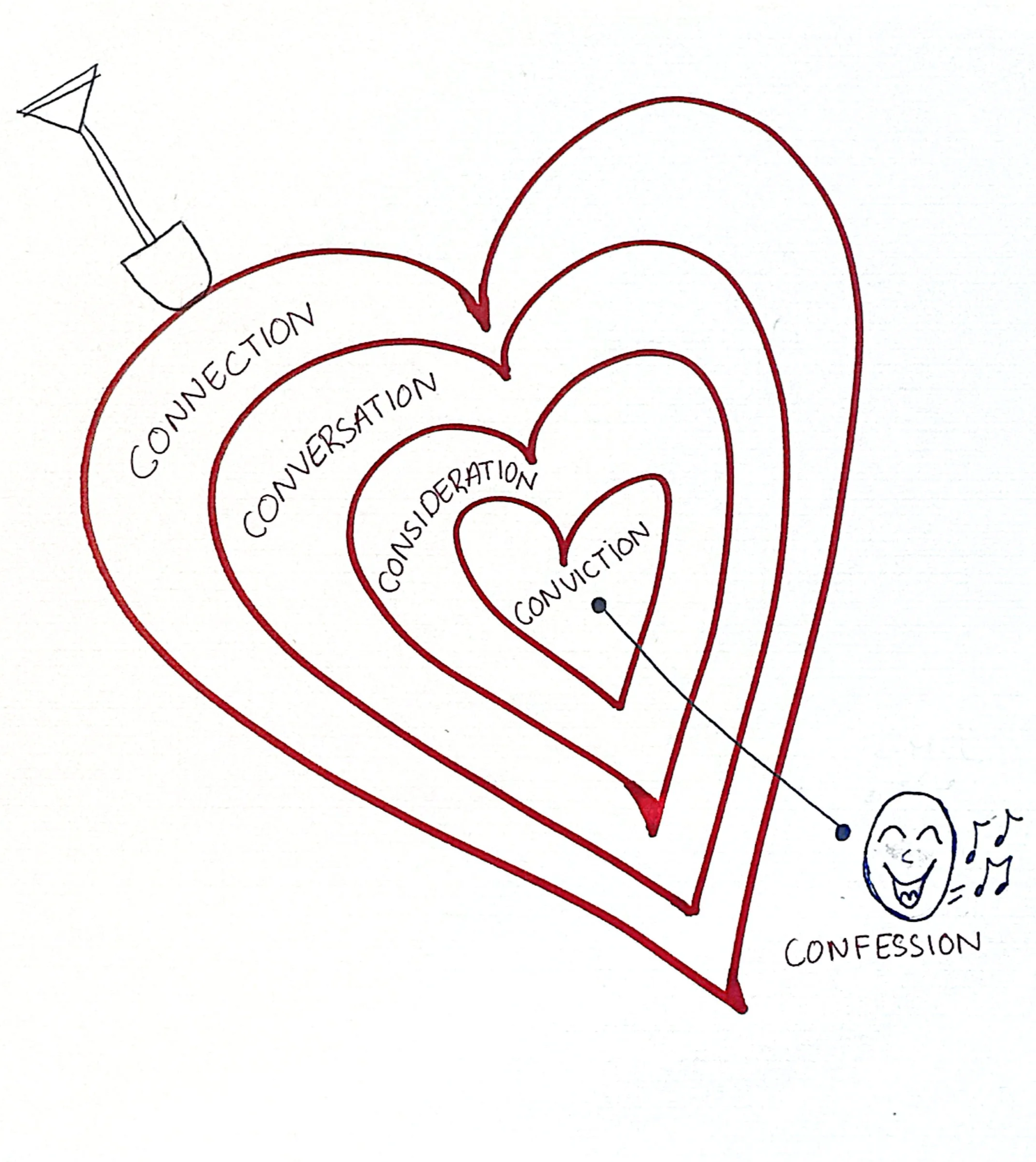
IS A VISION…
for spiritual growth and community transformation. For genuine transformation to occur, individuals must participate in a complete cycle of five distinct stages:
Connection: Establishing a bond with others and the church community.
Conversation: Engaging in deep, sincere dialogue with others and God through prayer.
Consideration: Humbling oneself to explore whether a teaching is true, rather than just collecting data.
Conviction: Allowing the Holy Spirit to confirm truth in the heart, leading to a sense of peace or deep realization.
Confession: Manifesting that internal conviction through verbal affirmation and outward behavioral changes.
-
Is the foundational step in the cycle of spiritual growth and life transformation. While it may seem simple, it is a profound and often neglected necessity, especially in a modern generation prone to isolation and loneliness. We as the church must seek connection.
Key aspects:
Soul-to-Soul Interaction: Connection is not just a corporate event on Sundays; it involves "engaging each one" at a deeper, personal level so the whole body of the church is truly linked.
Sideris Church principles:
Aggressive availability.
Cultivating dual citizenship: being both a citizen of heaven and one's local community.
Commitment to take one step beyond comfortable.
-
The second stage, Conversation, is described as moving beyond initial connection to engage in substantial, honest, and profound dialogue. This process is essential for true relational exchange and personal growth.
Key aspects:
Knowing and Being Known: Conversation is the primary tool for learning about one another, fulfilling our design to be known by God and others.
Prayer as Dialogue: A critical component is prayer which we define as conversation with God. If this element is missing, the entire five-part cycle will malfunction.
Sideris Church principles:
Kissing cocktail conversations goodbye.
Leading with lament: starting by acknowledging shared brokenness.
Not taking yourself too seriously.
-
The third stage, Consideration is defined as a critical step in the spiritual growth cycle. Rather than viewing it as mere data collection or intellectual learning, it is characterized as an act of humbling oneself.
Key aspects:
Moving Out of the Center: True consideration requires stepping out of the center of one's own knowledge. It involves setting aside preconceived notions to sincerely and honestly ask, "Could this be true?"
Openness to Truth: It is a process of giving new or existing ideas, especially scripture, the opportunity to reveal truth, beauty, and goodness.
Sideris Principles:
Look Up: Getting out of the "rubble of life" to see God's glory.
Keep Considering: Recognizing this as an ongoing, repetitive practice rather than a one-time event.
Honesty Breeds Freedom: Humility creates the space for truth to rise to the top.
It’s Not About You: The overarching principle that keeping one's focus on Jesus rather than oneself is essential to discovery.
Stopping at this stage, while informative, falls short of the full transformation promised by the gospel, as it lacks the follow-through of conviction and confession.
-
is described as the fourth stage in the cycle of transformation. It is the internal movement from questioning ("Could this be true?") to a deep, personal realization that something is indeed true, right, or good. It is the point where the Holy Spirit confirms truth within a person's heart.
Key aspects:
Positive Nature: While often associated only with the negative experience of being convicted of sin, conviction is primarily a positive and exciting experience. It includes having a deep-seated trust in God's goodness, value, and trustworthiness.
Avoiding False Conviction: A major warning is against "false conviction"—feelings of guilt that do not originate from the Holy Spirit but from external pressures, cultural voices, or unhealthy past guidance. Engaging in the full cycle of the Five Cs, particularly staying grounded in scripture and community, makes sure convictions are genuine and from God.
The Necessity of the Full Cycle: Conviction cannot be bypassed or shortcut. If one jumps to conviction without first engaging in honest consideration, they remain prone to legalism, sectarianism, or judgmentalism. True transformation happens when conviction leads directly into the final stage: confession.
-
It’s not just as the act of admitting sins, but as the physical manifestation of internal conviction. While the modern church often limits the term to verbally speaking sins aloud, true biblical confession is a broader, multi-faceted process:
Beyond Words: Confession includes both verbalization and the resulting change in how one lives. If someone confesses a wrong but fails to change their actions, they have not fully completed the cycle of the Five Cs.
Confession of Truth: three forms of joyfully confessing truth:
Admitting, "I was wrong" about a previously held belief.
Acknowledging, "I never knew," when discovering a new spiritual truth.
Realizing, "I knew in part," as one's understanding of God deepens over time.
Corporate Confessions: Throughout history, the church has used "creeds" (such as the Apostles' Creed or the Nicene Creed) as corporate confessions- communal agreements on what is true about God based on shared conviction.
Confession is the crucial final step that bridges internal belief with external transformation, ensuring that faith results in tangible changes in a person's life and actions.